The Postal Service, Big Freedia and Baths conspire for a night of unrepressed fun at the Greek Theatre
Staff Editor on
0








By Gabriel Jones
There was no shortage of sensory assault at the show headlined by the Postal Service at the Greek Theatre on Tuesday night.
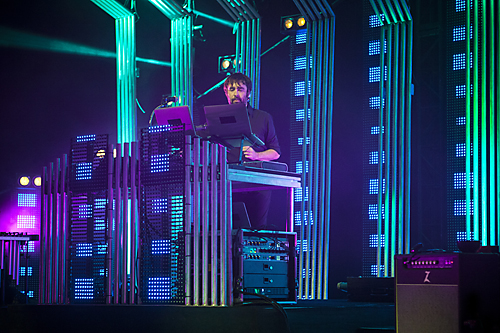
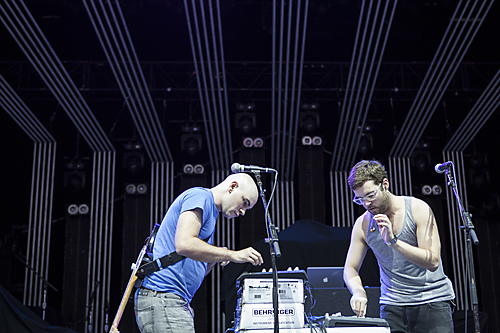
Baths, local musician Will Wiesenfeld’s solo project, opened the show with a set that sounded like he’d grown up listening to the Postal Service’s “Give Up” and put it through a food processor. Dressing and sounding like he was alone fiddling around in his bedroom, he offered up an alternately melodic, jagged, meandering series of songs that came off like ambient electronica’s answer to tUnE-yArDs. If punk was the articulation of rage – finding the words for raw emotion – Baths sounds more like the emotionalization of intellect, finding ways to turn words into raw sounds.
There were brief moments that approached the anxious, excitable highs of the Postal Service, although where the Postal Service wavers uncertainly between euphoria and resignation, Baths shifts more between plaintive and manic, always one note away from a warble or whine or angst-ridden scream.
- ||| Photos by Laurie Scavo
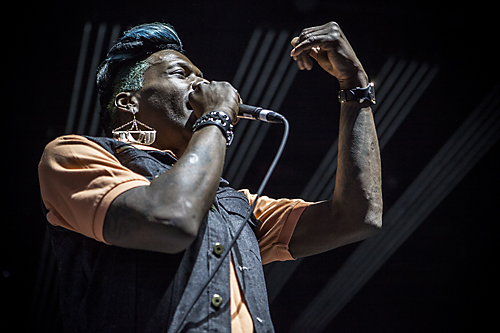
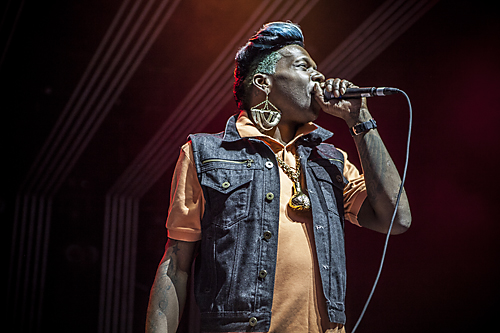
It was the second opener who stole the show, though: Big Freedia rolled out a distinctive brand of New Orleans-style bounce music and, within a few seconds, brought the crowd of polite, slightly sad white shoegazers who’d come to pay homage to their delicate emotional lives of 10 years ago into a state of shock, bewilderment, and, soon enough, delight.
Commanding the stage with a deep, loud, powerful voice and an exuberant swagger like a gloriously gay Chuck D, Freedia belted out hits like “Azz Everywhere” (“Ass everywhere!/Ass all over!/Bend over like I toldja!”) and, like a field marshal, ordered the three stage dancers – er, twerkers – to bend over and “shake that ass.”
And sure enough, the crowd was treated to pretty much 30 minutes straight of bent-over ass-shaking, to the point where it felt like an ass version of a headbanging Slipknot concert, twerking and twerking and twerking. Moonwalk-twerking, speaker-humping twerking, synchronized twerking. After a while the three pink pulsating booty shorts grew hypnotic, like shimmering jellyfish, amid the relentless beats. And then it was over like a bomb that’d gone off, leaving the sea of now-grown-up emo kids wondering exactly what had just happened and whether their lives would ever be the same.
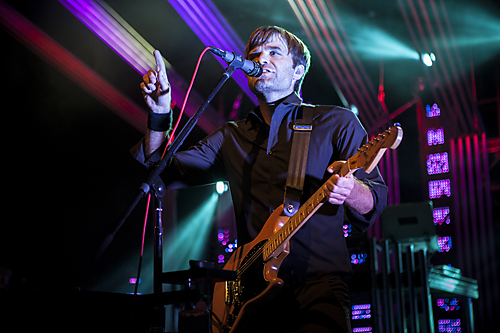
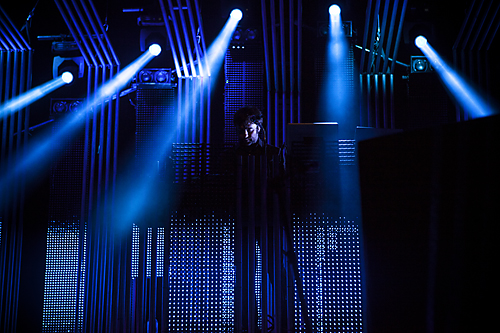
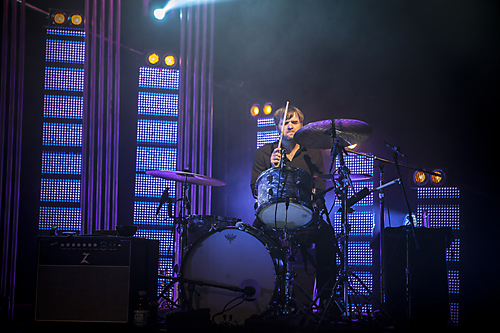
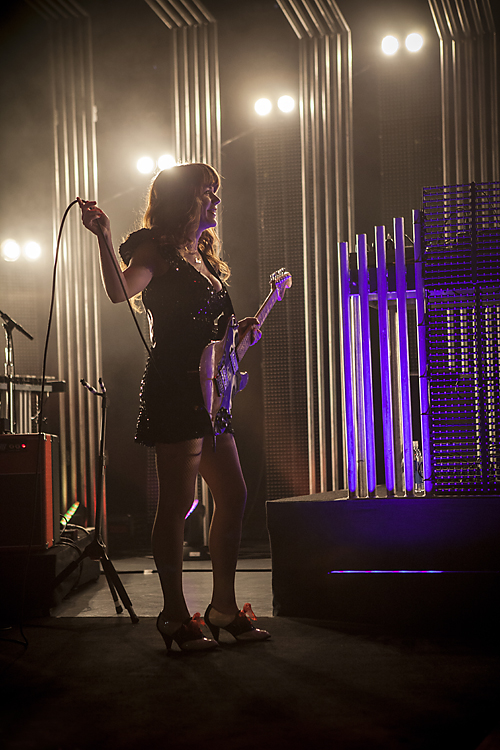
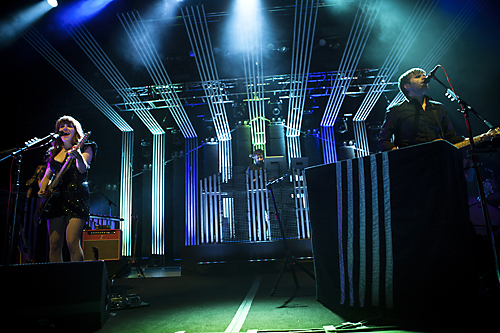
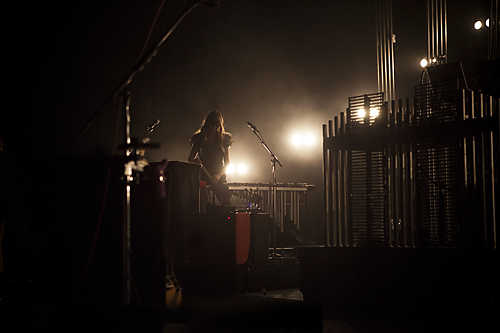
The Postal Service then took to a stage that looked like a ’70s disco movie’s idea of the future. And, indeed, Ben Gibbard and Jimmy Tamborello’s unexpectedly outsized side project was always about simultaneously looking backwards and forwards and mostly being forever caught in between. Even in its strange, alluring combination of humanity and technology – warm, soft, quiet but emotionally powerful vocals over techno blips and beats, Radiohead for the Teletubbies generation – the band drew its success largely from articulating the sense of dislocation that many of us now feel in being many places at once but nowhere in particular, and entirely comfortable and welcome in none of them.
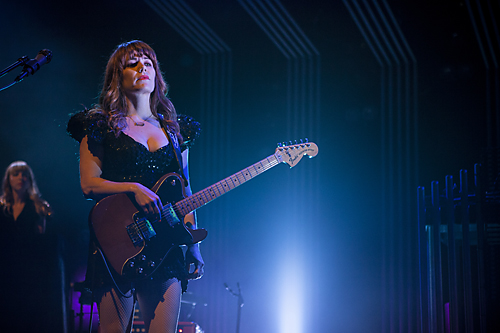
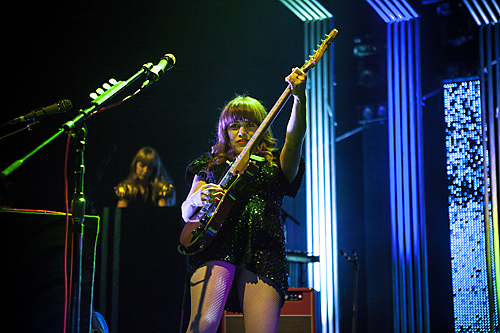
Reunited for the 10-year anniversary of the release of their only album, “Give Up,” aided by multi-instrumentalist Jenny Lewis and Laura Burhenn, the band still doesn’t quite seem to know where or what it is. Tamborello remixed or sped up several of the old hits, leaving the crowd somewhere between nostalgia and discovery as they relived the soundtrack of their post-adolescence.
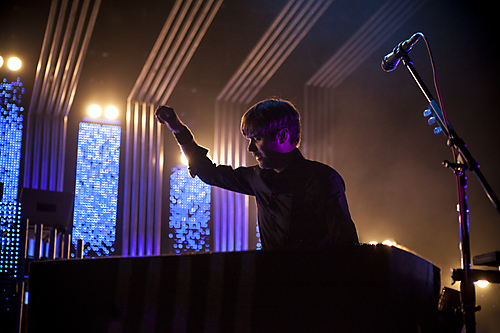
And Gibbard, who normally stands fairly still during Death Cab for Cutie shows, couldn’t stop moving the entire show, dancing and jerking and bouncing around (though, disappointingly, no twerking) and looking like if he stopped even for a second he’d never find his groove again. He’s also lost the glasses and the softness and the bookishness and moves now like a man rapidly approaching middle age but trying his damnedest to still be hip with the kids. And, good on him for trying – good on the whole crowd for coming to pay their respects to the kids they once were and still wish they could be, even with all the wounds.
In the end the show felt like a genuine catharsis as everyone worked through their past and sang along happily, nostalgically, with the old tunes and shouted for the encore and then looked around for what’s next.


Leave a Reply