Arcade Fire pulls off its Capitol idea
Kevin Bronson on
2

To twist a familiar warning: “Objects in mirror are farther away than they appear.”
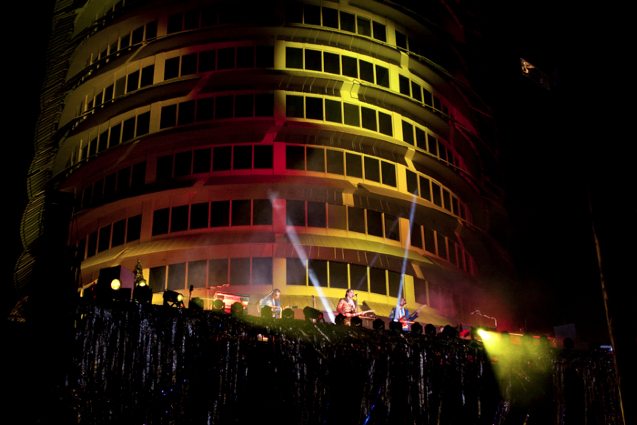
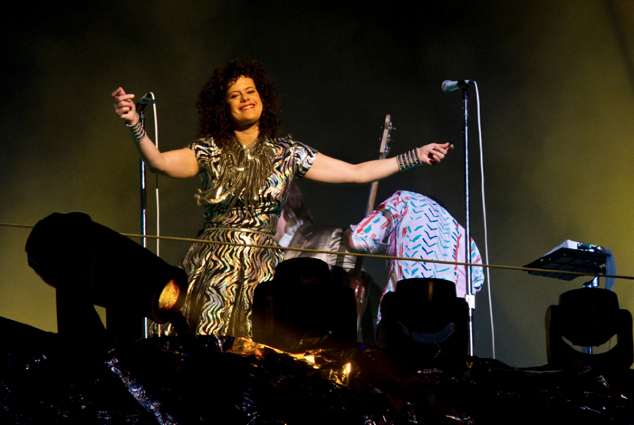
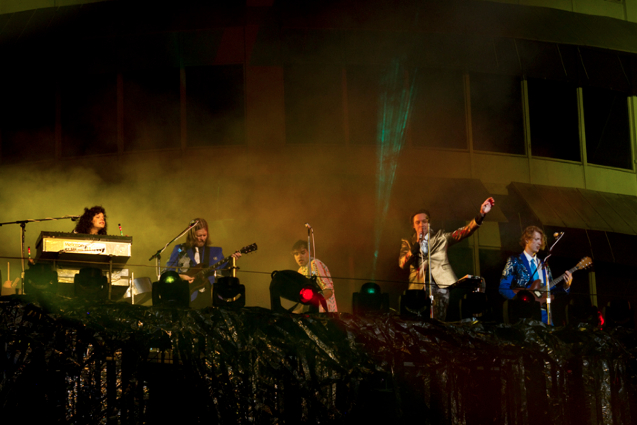
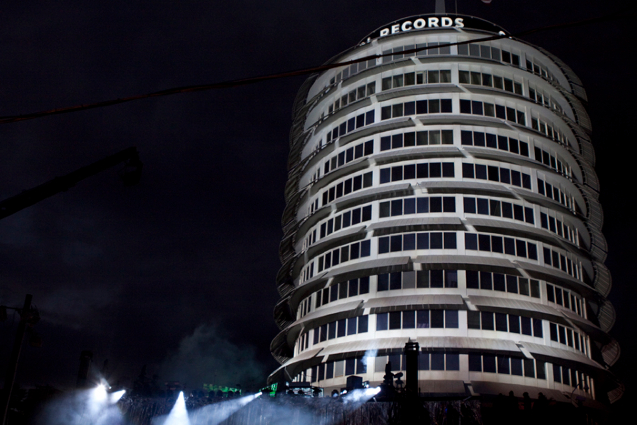
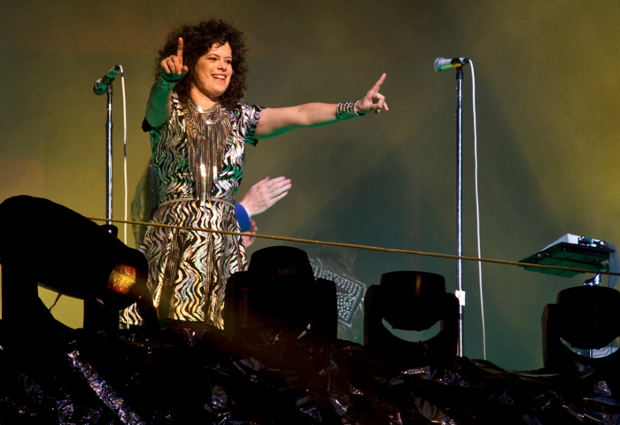
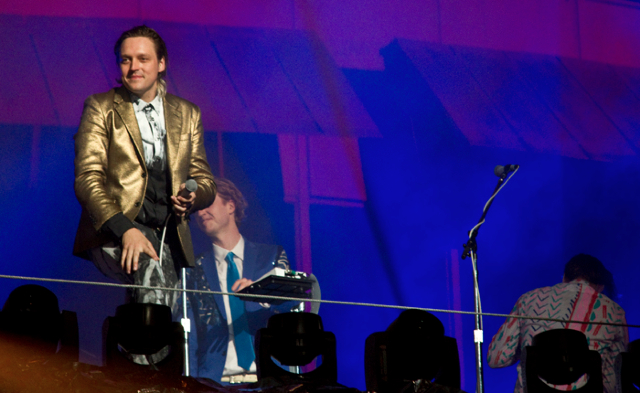
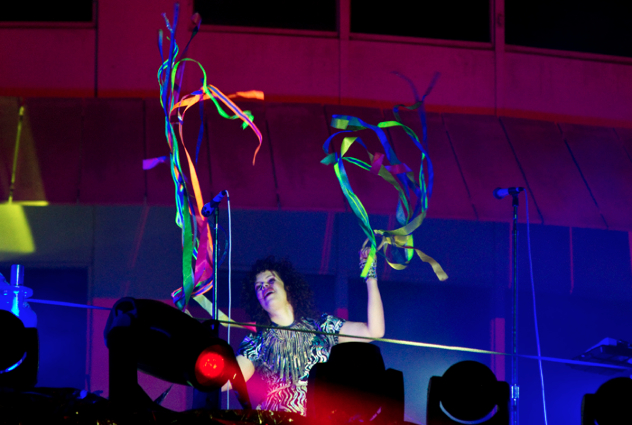
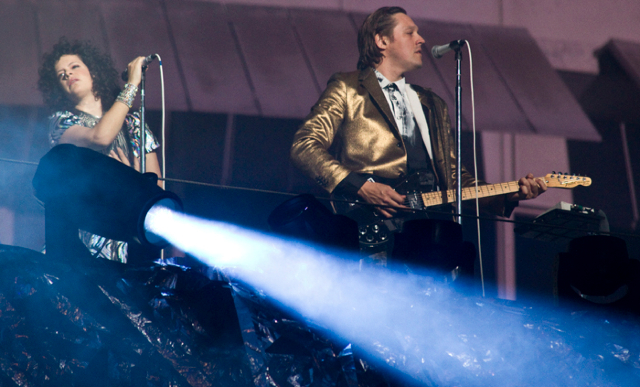
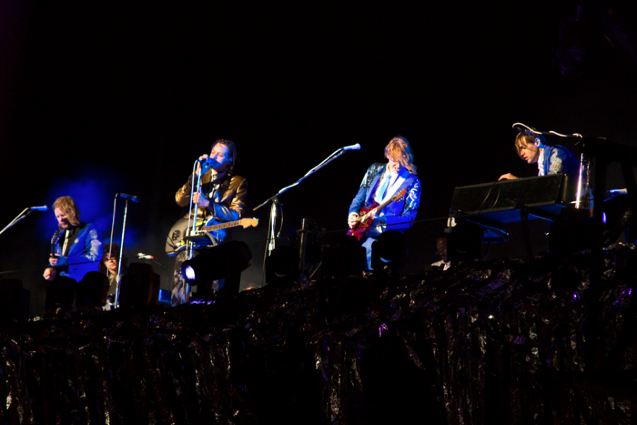
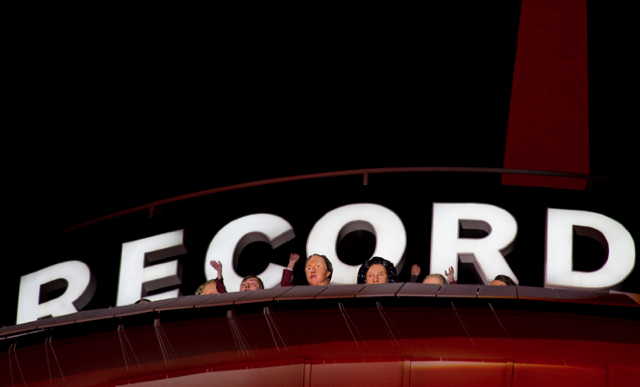
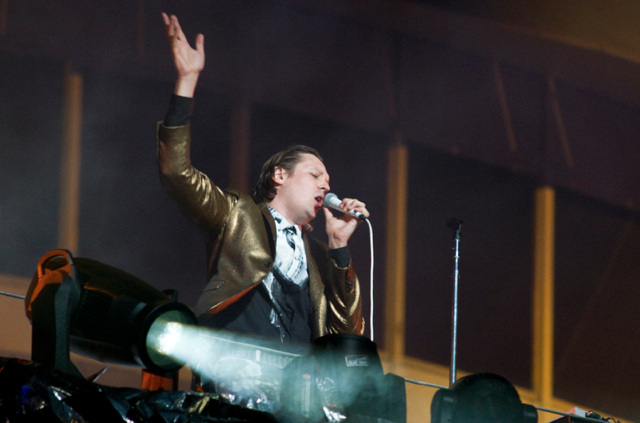
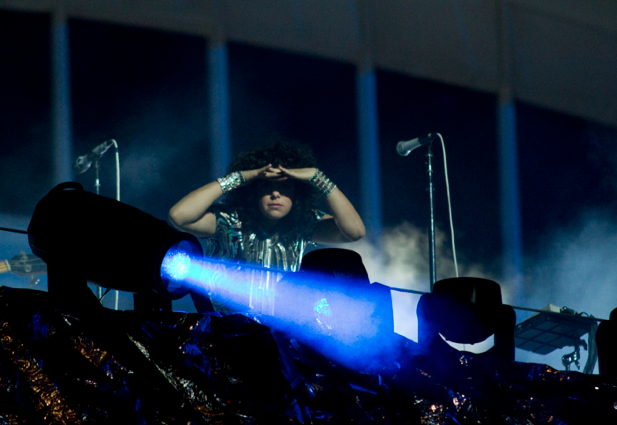
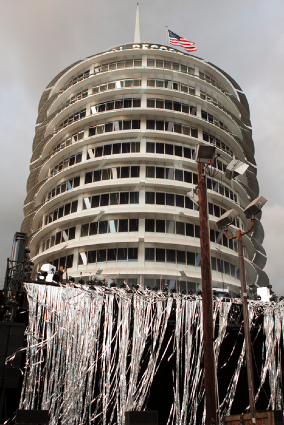
That applied in more ways than one Tuesday evening when Arcade Fire played an outdoors Hollywood show to celebrate the release of it fourth album “Reflektor.” The stage was 30 feet in the air, on the roof of an annex to the Capitol Records building, with the crowd of about 2,000 below, sardined into a parking lot across Vine Street from the Avalon. Somewhere up there, in the smoke and above the streamers and backed by the famous round tower, one of the planet’s great rock bands pulled off a nifty publicity stunt.
- ||| Photos by Carl Pocket
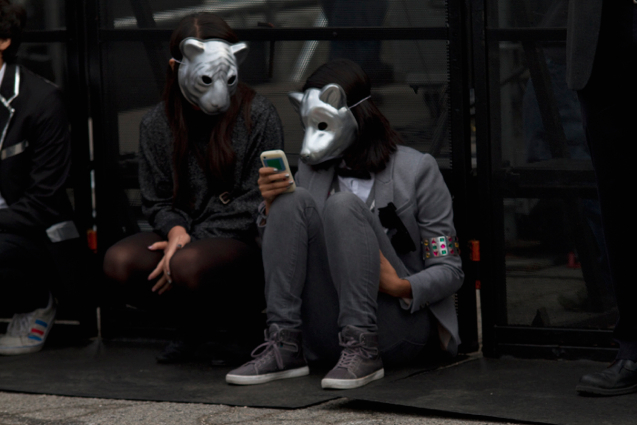
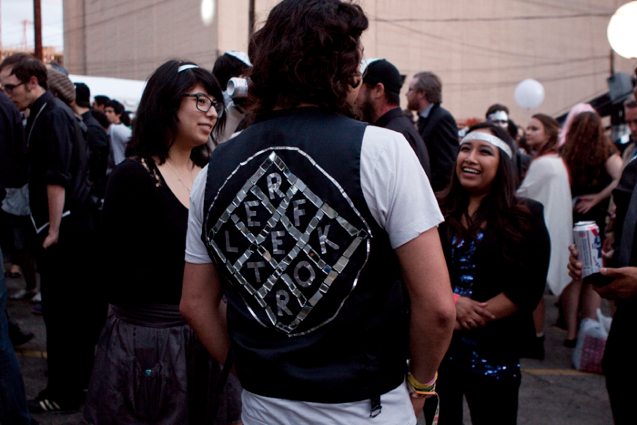
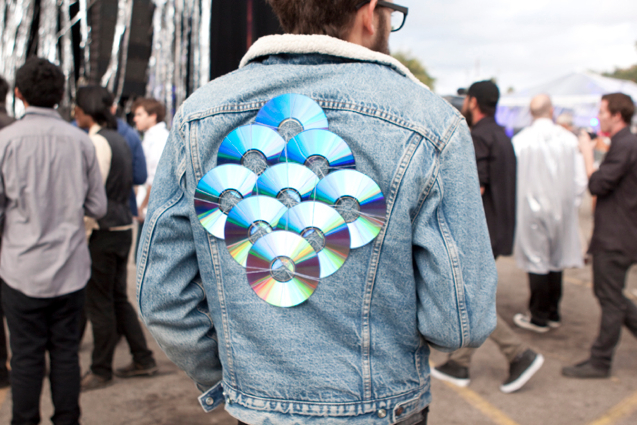
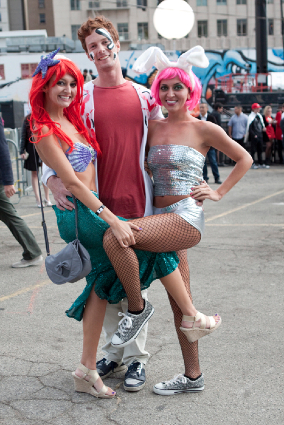
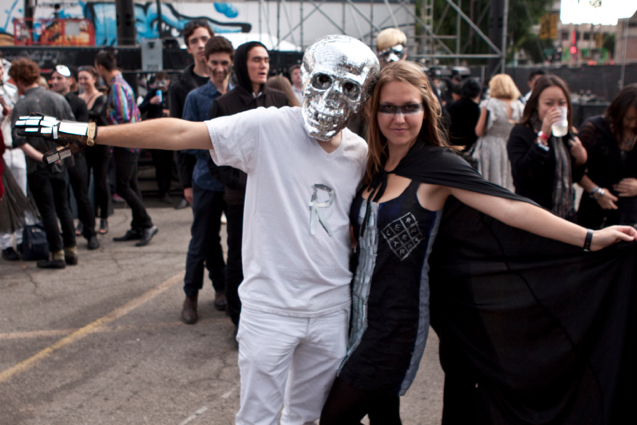
The theme of the event was “Be a Reflektor,” with attendees winning passes via various social media gimmickry (although loads of gate-crashers made it in). Fans were asked to dress the part, and most did – shiny happy people adorned with baubles, trinkets, tsotchkes, tin foil and other accoutrements, all ready for the selfies they will remember years from now as “That Time I Dressed as a Prop for Arcade Fire.”
All in good fun. In the past decade, the Canadians more than any other band has been responsible for transforming indie-rock into Big Theater, both conceptually and on stage. They just never had to be so contrived about it.
The distance between then and now is reflected (so to speak) in the new album, an opus overpopulated by middling dance-rock songs that any number of B-level bands could have made. “Reflektor” is not as sensational as Pitchfork made it out to be, not as horrible as the Washington Post’s evisceration, and your opinion of its greatness will very likely depend on whether you consider James Murphy (who produced) an important figure. Or how squeamish you get when your favorite rockers start sounding like an LCD Soundsystem cover band.
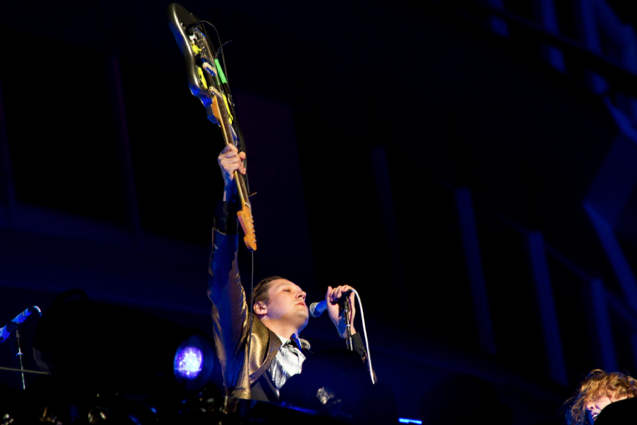
The shine was clearly still on for everybody who craned their necks in Hollywood on Tuesday. Arcade Fire played for over an hour, starting with the new album’s title track, dedicating “Afterlife” to the late Lou Reed (and later working in some of “Satellite of Love” with its own “Supersymmetry”) and finishing with oldies “Sprawl II (Mountains Beyond Mountains)” and “Neighborhood #3 (Power Out).”
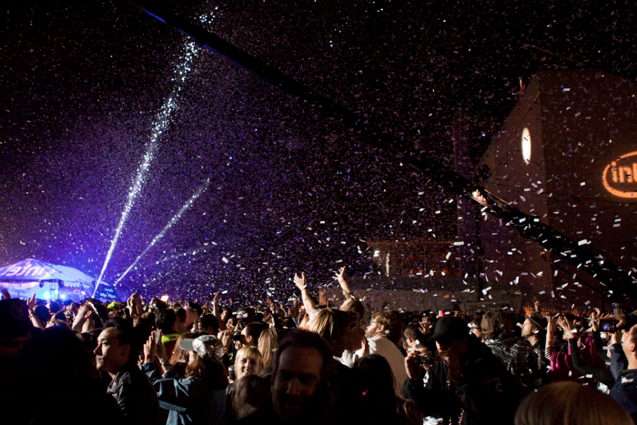
The latter two came well after Arcade Fire ended its main set with “Here Comes the Night Time” – which was punctuated by an absolute blizzard of glittering paper spewed forth by confetti cannons. (Anybody who didn’t arrive home with at least a few pieces of confetti in their hair/clothes/costume wasn’t really at the show.) (And confetti littered the streets of Hollywood for at least four blocks east of the Capitol building.)
“I don’t know, guys,” Win Butler said at one point. “Sometimes I think I just woke up in the wrong body at the wrong time.”
Ain’t it the truth.



Well said all around. The record to me feels like an exercise in great production without much inspiration to support it. Regardless, wish I’d been able to make it to this show, if nothing else just to see the spectacle.
I don’t know. I had a great time and left without any confetti on me.